
Lesson made on December 9, 2025
Download Printable Lesson (PDF)
Download Printable Answer Key (PDF)
Reading Lesson:
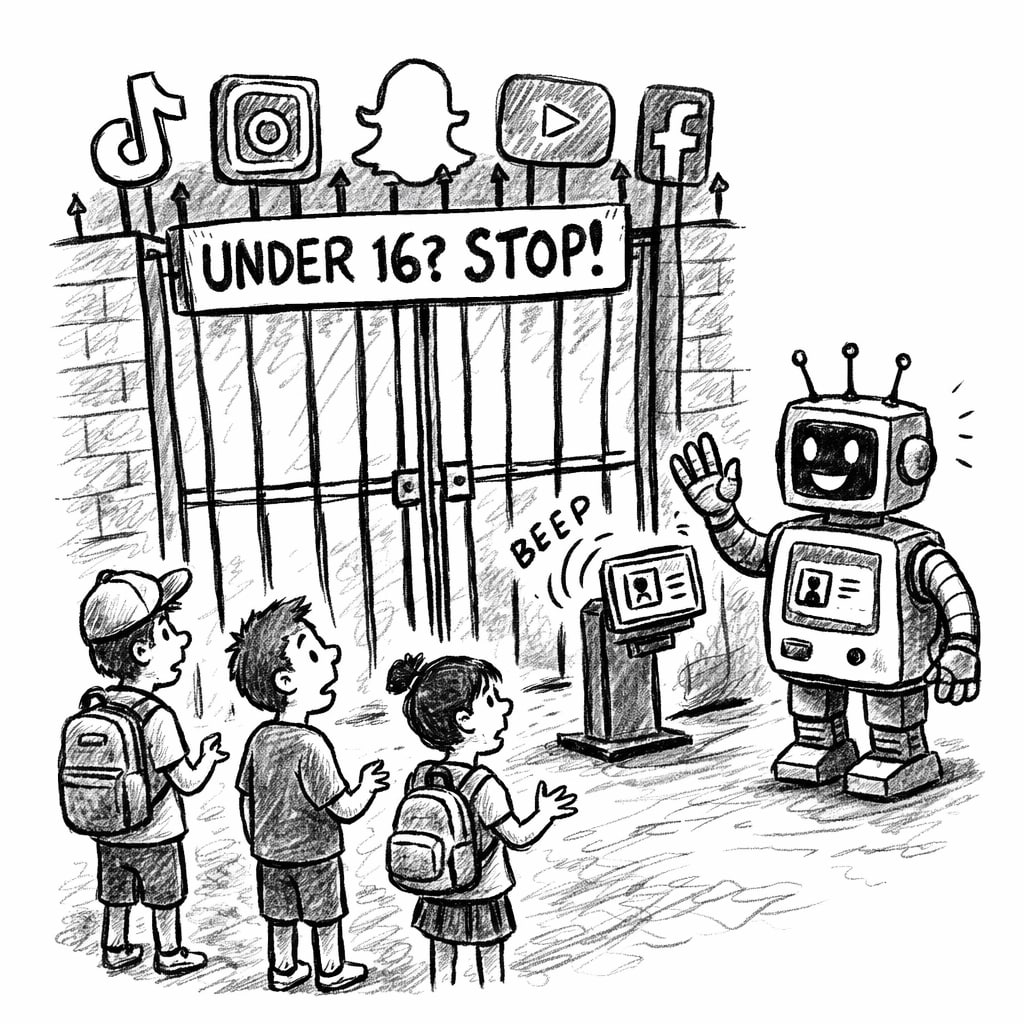
Australia has started a new rule that bans kids under 16 from using major social media apps like TikTok, Instagram, Facebook, YouTube, Snapchat, and others. These companies must delete accounts belonging to users younger than 16 and stop them from making new ones. If they don’t follow the rules, the companies could be fined millions of dollars.
To help enforce the ban, many kids have had to take age-verification tests. Some of these tests haven’t worked perfectly, and a few underage kids have still passed them. The government says the system won’t be perfect right away.
Parents have very different reactions. Some are upset because their kids feel left out when their friends still seem able to use social media. Others think the ban is helpful because their children were becoming addicted to social media. A few parents even admit they are teaching their kids how to get around the rules.
The ban is getting attention from other countries that might copy Australia’s idea. The government plans to carefully study the results to see whether the ban helps kids–like improving their sleep, schoolwork, and mental health–or whether it causes new problems, like kids learning to use unsafe parts of the internet.
Social media companies now have to report back to the government about how well they’re following the rules and how many accounts they have removed. The government says the public will be able to see this information.
Comprehension Quiz:
Speaking and Writing Activities:
– Discuss these questions with a partner or a small group.
– Choose one topic and write a response to it. Show your writing to a classmate or teacher.
1. Do you think kids under 16 should be allowed to use social media? Why or why not?
2. If your country made the same rule as Australia, how do you think kids and parents would react?
3. What do you think is a good way to check someone’s age online? Do you think this kind of system can really work?
More Reading Practice:
What countries other than Australia have restricted social media use for children?
In France, a law passed in 2023 says social-media platforms must get permission from a parent before a child under 15 can make an account.
In Germany, children aged 13–16 may use social media–but only if a parent agrees first.
In Italy, children under 14 need parental consent to open a social-media account. Once they are 14 or older, they do not need permission.
In Denmark, the government recently said it plans to ban social media for children under 15–though parents might give permission for children aged 13–14 to access it.
In Belgium, there is a rule (from 2018) that children must be at least 13 to sign up for social media without needing parental permission.
Some countries in the European Union are discussing a broader rule that would make 16 the standard minimum age for social media access.
Many of these regulations aim to protect children from possible harms online–such as exposure to inappropriate content, cyberbullying, or problems with mental health.
Source: The Guardian
How do you know if a child is addicted to social media?
A child may be struggling with social media addiction when it begins to affect important parts of daily life. You might notice that the child spends most of their free time online and becomes upset or anxious when they cannot use their phone. Their schoolwork may start to slip because they are checking apps instead of focusing on assignments. You may also see the child staying awake late at night, leading to tiredness during the day. Sometimes the child begins to lose interest in hobbies or activities they used to enjoy, choosing social media instead. Their mood may change quickly, especially if they receive negative comments or fewer likes than they expected. When these behaviors continue over time and make it harder for the child to stay healthy, do well in school, or maintain good relationships, it may be a sign that social media use is becoming unhealthy.
What are the most popular social media apps for American children?
In short, many American children and teens spend time on YouTube, TikTok, Instagram, and Snapchat. These apps attract them because they offer video, photo, or quick-message formats–ways to express themselves, see content, and keep in touch with friends.
Many American children and teens use YouTube. Around nine out of every ten teenagers (ages 13–17) say they have used YouTube.
Because it is video-based and offers many kinds of content, from music videos to how-to guides, it appeals to a wide range of young people.
TikTok is also very common among American teens. More than half report using it. TikTok has become a major platform for sharing short videos. For many young people, it is a place to watch entertainment, learn things, and connect with peers through trends and creative content.
Another widely used app among teens is Instagram. A large portion of young people report using it. Instagram offers both photos and videos, and many teens use it to share parts of their lives, connect with friends, or follow interests.
Snapchat continues to be used by many teens as well. A significant share say they have used it. Snapchat tends to appeal to young people who want quick, often temporary messages or images with friends — a different style than video-sharing platforms.
The use of older social media networks like Facebook has dropped for many young people. Fewer teens today say they use it compared with a decade ago.
Source: Pew Research Center
Information from Australia’s eSafety Commissioner
ESL lesson about Brazil banning smartphones in schools
ESL lesson about Facebook going to trial over Instagram and WhatsApp